Executive Key Takeaways for Texas Developers and Project Owners
- Single-Point EPC Accountability Eliminates Change-Order Friction: Consolidating structural engineering, procurement, steel fabrication, and field construction under one DFW EPC contract cuts owner change orders by 60% to 75%.
- 20% to 35% Faster Speed-to-Occupancy: Overlapping Front-End Engineering Design (FEED) and long-lead steel/equipment procurement compresses Dallas-Fort Worth project delivery by 10 to 16 weeks.
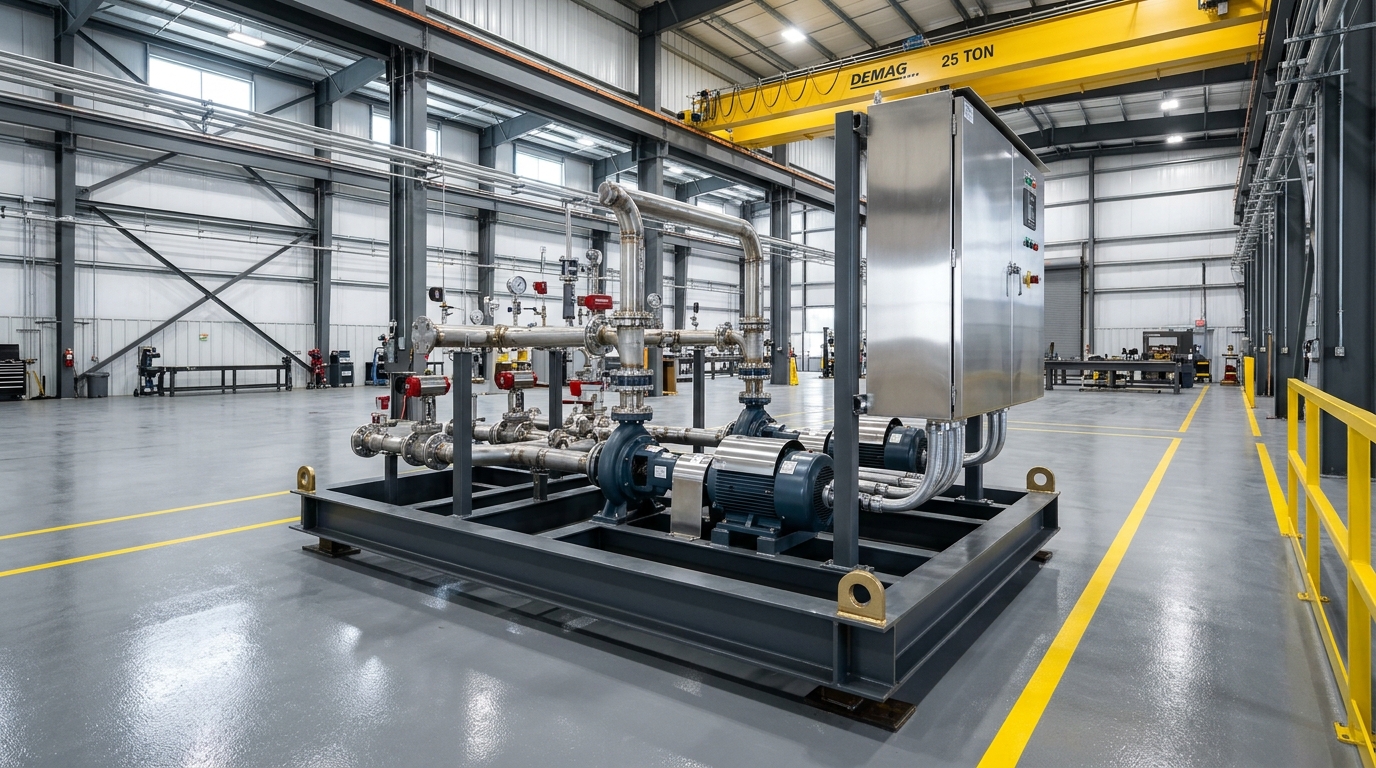
- Self-Perform Structural & Mechanical Capability: General contractors that self-perform structural steel, concrete foundations, and modular equipment installation insulate developers from DFW subcontractor labor shortages.
- Verified OSHA & ISNetworld Safety Governance: Pre-qualification requires EMR ratings below 0.85, site-specific OSHA 29 CFR 1926 safety plans, and audited quality dossiers.
1. Why DFW Developers Are Shifting from Traditional GCs to Turnkey EPCs
Across the Dallas-Fort Worth Metroplex, from AllianceTexas and Northlake industrial corridors to South Fort Worth and mid-cities commercial developments, capital project owners face compressed tenant delivery windows, volatile steel and concrete supply chains, and tight municipal permitting timelines. Selecting the right construction partner is no longer a simple low-bid comparison; it requires evaluating whether a prospective firm operates as a pass-through paper broker or a true Turnkey Engineering, Procurement, and Construction (EPC) Partner.
At Trident Structures turnkey industrial EPC and commercial construction services, our 20-year track record in Fort Worth demonstrates that project certainty is won during pre-construction. When structural engineering, shop fabrication, and field erection sit under one roof, DFW developers eliminate the adversarial finger-pointing between third-party architects, structural engineers, and general contractors.
Whether you are evaluating pre-engineered metal buildings vs. conventional structural steel in North Texas or planning complex process infrastructure via modular process skids vs. stick-built fabrication, applying a disciplined GC/EPC evaluation framework protects both your capital budget and your tenant lease commencement dates.
2. Quantitative Scorecard: Turnkey EPC Partner vs. Paper General Contractor
The table below quantifies the financial, schedule, and risk differences across Texas commercial and industrial capital projects:
| Evaluation Parameter | Trident Turnkey Design-Build / EPC | Traditional Fragmented Approach | Net Owner Advantage |
|---|---|---|---|
| Contractual Risk & Design Liability | Single-point turnkey responsibility for engineering, cost, and schedule | Fragmented between Owner, Architect, Engineer, and GC | Eliminates A/E vs. GC Disputes |
| Self-Perform Construction Ratio | High (In-house steel fabrication, erection, concrete, and rigging) | Low (85-95% brokered to tiered DFW subcontractors) | 15-22% Margin & Schedule Control |
| Long-Lead Steel & Equipment Procurement | Early mill/shop release during 30% FEED engineering | Delayed until 100% IFC drawings and sub buyout | Saves 8-14 Weeks on Critical Path |
| Change Order Frequency (RFIs) | Under 2% of contract value (internal 3D BIM clash resolution) | 6% to 12% average industry RFI/change-order escalation | Predictable Lender GMP CapEx |
| Tarrant/Denton Permitting Velocity | In-house Texas P.E. sealed packages & municipal pre-submittals | Dependent on external design consultant revisions | Faster Grading & Building Permits |
| Field Safety & QA/QC Governance | Dedicated OSHA 1926 / AWS D1.1 shop & field inspectors | Variable across lowest-bid subcontractor crews | Lower Insurance & Zero Stop-Work |
Table 1: Quantified commercial and industrial project execution comparison across North Texas developments. Swipe horizontally on mobile devices.
3. Evaluating Self-Perform Structural Steel and Civil Foundation Capacity
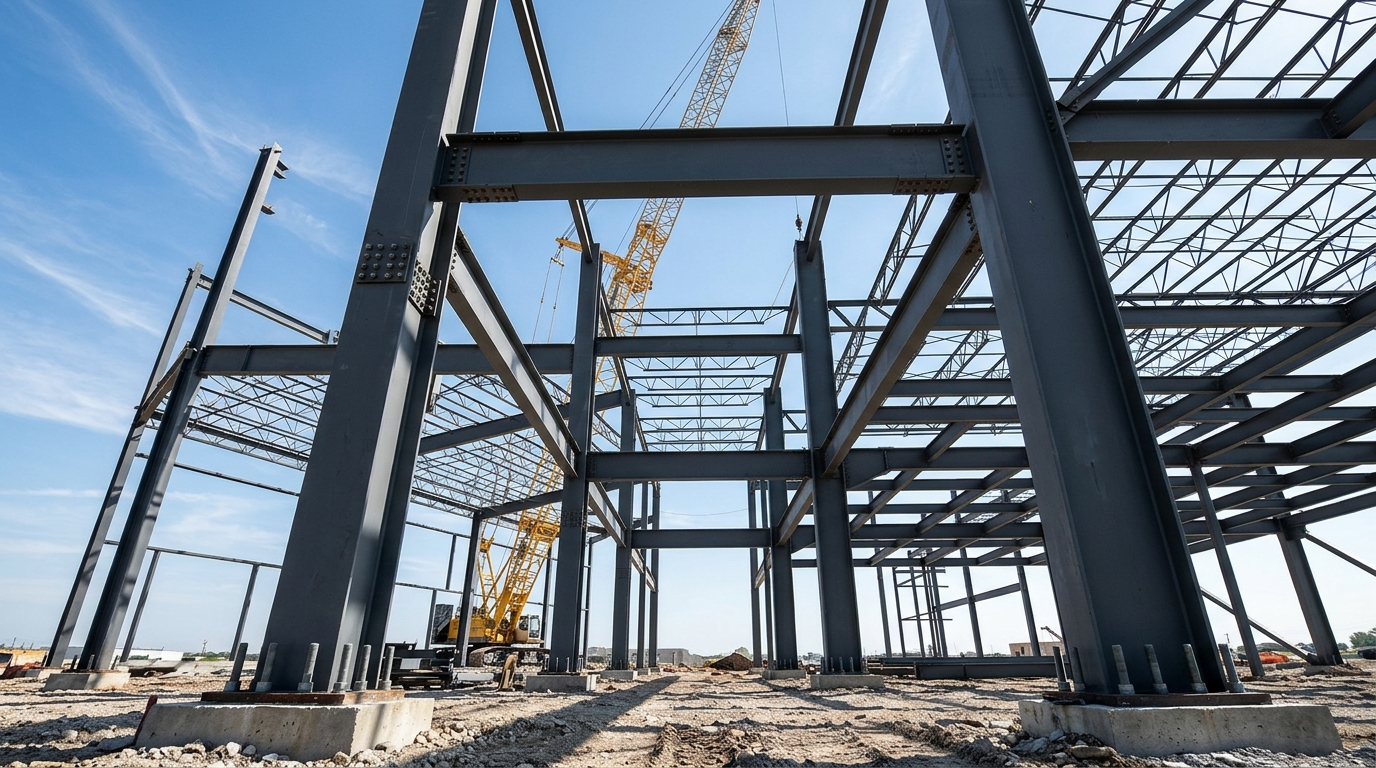
The primary failure mode in North Texas commercial construction occurs when a general contractor signs a Guaranteed Maximum Price (GMP) contract without controlling the critical-path trades: structural concrete foundations, structural steel fabrication, and heavy mechanical erection. When DFW industrial activity spikes, broker-style GCs compete for the same overbooked subcontractor pool, resulting in unannounced schedule slips.
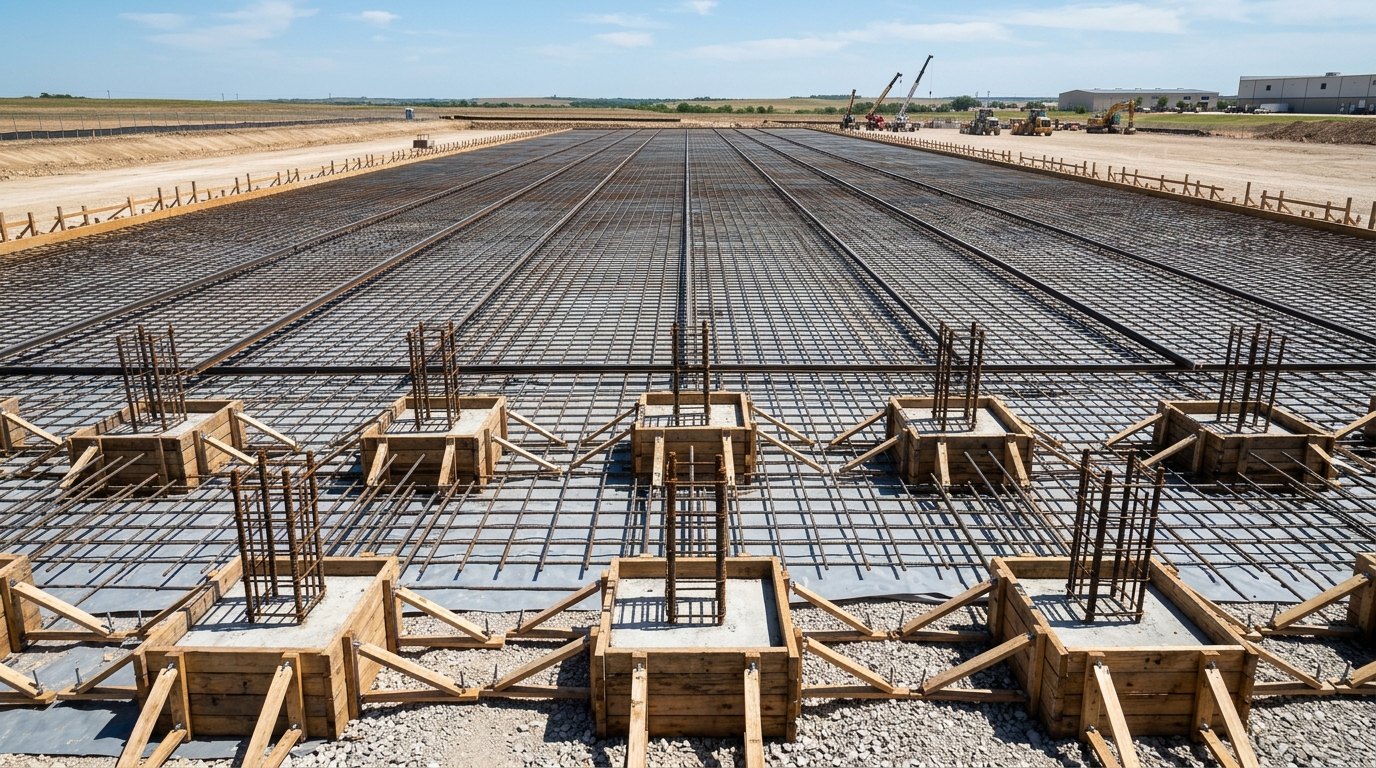
By contrast, partnering with an EPC contractor that maintains direct Texas steel fabrication and field erection crews allows foundation anchor-bolt packages and structural steel shop drawings to run concurrently. This parallel workflow connects directly with our permitting and zoning guide for industrial warehouses in Tarrant County, ensuring site grading and pier drilling start the day municipal civil release is granted.
4. OSHA 1926 Safety Governance, EMR Ratings, and Risk Mitigation
OSHA 29 CFR 1926 & AISC COMMERCIAL SITE COMPLIANCE
OSHA & CODE PASS: VERIFIEDTrident Structures enforces strict commercial and industrial jobsite safety protocols across all DFW developments:
5. Engineering Schematic: Integrated EPC Delivery Architecture
The engineering schematic below illustrates how Trident Structures integrates front-end engineering, shop fabrication, and parallel site execution:
DFW TURNKEY EPC INTEGRATED PROJECT DELIVERY MATRIX
6. Procurement Leverage and Long-Lead Equipment Expediting in Texas
Developers evaluating EPC partners should require verifiable compliance with national structural and commercial building codes:
- Structural Steel & Envelope: 2021/2024 International Building Code (IBC) as adopted by Fort Worth and DFW municipalities; AISC 360 Specification for Structural Steel Buildings; AWS D1.1 Structural Welding Code.
- Concrete & Foundations: ACI 318 Building Code Requirements for Structural Concrete; post-tensioned and reinforced slab-on-grade engineering calibrated for North Texas Plasticity Index (PI) soil movement.
- Commercial Budget & Delivery Control: Open-book cost modeling aligned with our guide on managing commercial construction budgets: design-build vs. hard bid.
7. Pre-Qualification Audit Checklist for DFW Commercial Developers
Before awarding a commercial or industrial contract in Dallas-Fort Worth, developers should require every shortlisted bidder to pass this 5-point pre-qualification audit:
- In-House Engineering & BIM Integration: Verify whether the contractor resolves structural, civil, and MEP clashes internally in 3D before foundation pours.
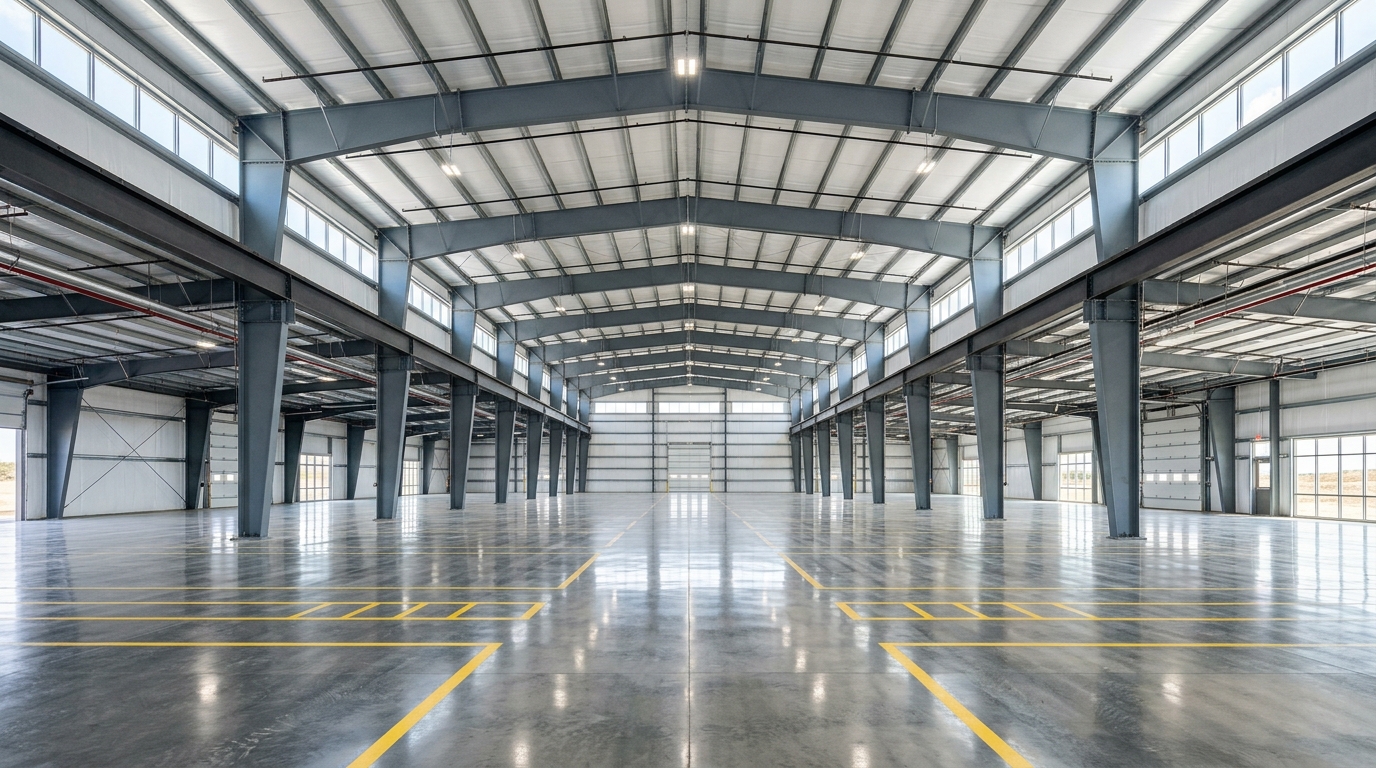
- Shop Fabrication Capacity: Confirm direct access to structural steel and modular fabrication facilities (view Trident Structures manufacturing capabilities) to bypass third-party steel joist and beam bottlenecks.
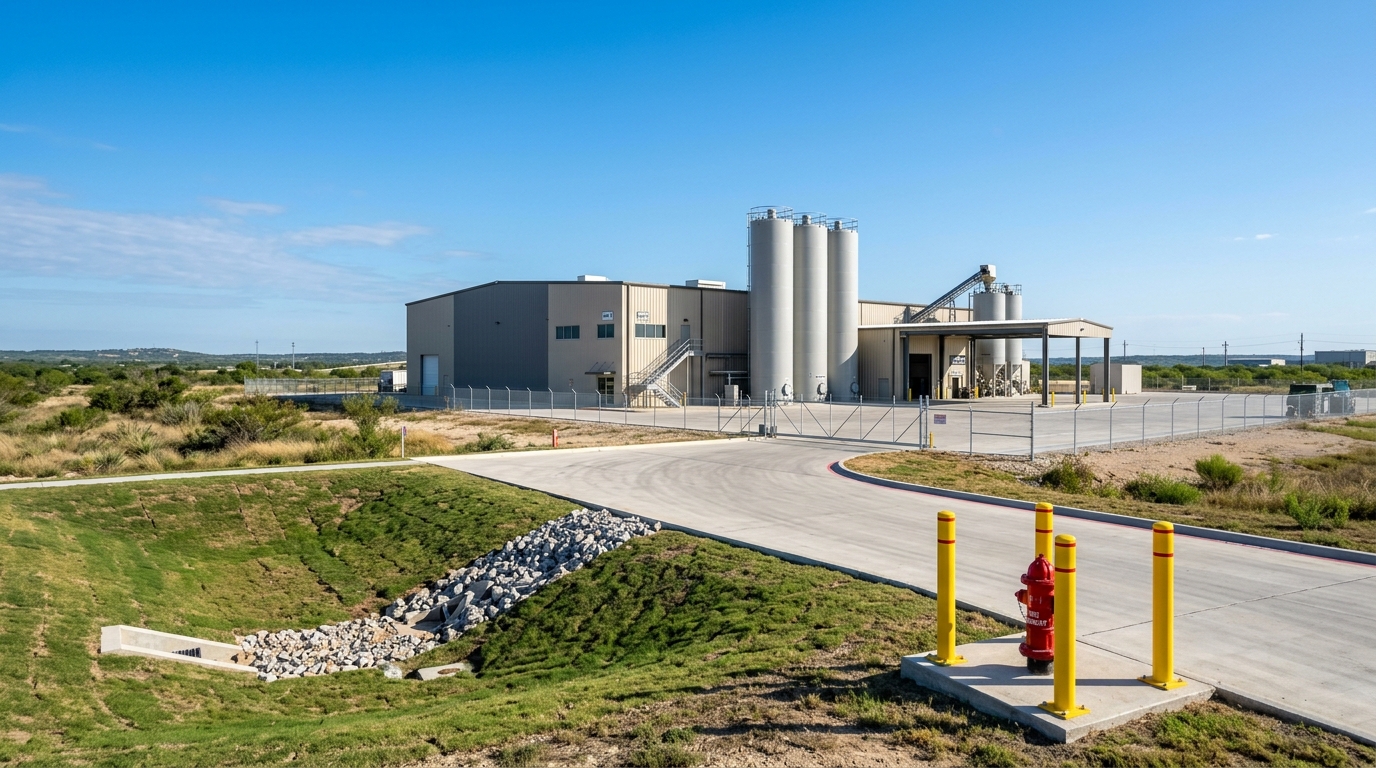
- Relevant DFW Industrial & Commercial Portfolio: Inspect completed Texas facilities (explore Trident Structures featured projects) of comparable clear height, crane loading, and site acreage.
- Financial Bonding & Payment History: Audit surety bonding capacity, lien-free project completion history, and transparent subcontractor payment schedules.
- Commissioning & Certificate of Occupancy (CO) Track Record: Review historical schedule adherence from Notice to Proceed (NTP) through final fire marshal and municipal CO sign-off.
8. When Traditional Bid-Build GCs Remain Appropriate
While turnkey EPC and design-build delivery outperform on 85% of DFW industrial, manufacturing, and commercial developments, traditional design-bid-build GC selection remains applicable in select cases:
- Public Municipal Funded Projects: Statutory government procurement rules that mandate 100% completed third-party architectural drawings prior to sealed public hard-bidding.
- Minor Interior Tenant Improvements (TI): Non-structural cosmetic office finish-outs inside an existing shell building where no structural steel, foundation, or process engineering is required.
9. Frequently Asked Questions (FAQ)
A traditional Commercial GC builds from plans drawn by an outside architect and subcontracts nearly all trades. An EPC (Engineering, Procurement, and Construction) partner like Trident Structures integrates engineering design, direct material/steel procurement, shop fabrication, and field construction under a single contract with unified schedule and budget accountability.
Engaging an EPC partner during site due diligence and conceptual feasibility (prior to finalizing civil site plans) yields the highest ROI. Early involvement allows soil stabilization, detention pond sizing, structural steel bay spacing, and utility routing to be value-engineered before municipal permit submission.
Yes. Trident Structures engineers and constructs turnkey commercial steel buildings, automated and structural parking structures, dry-bulk storage terminals, concrete batch plants, and modular process facilities across Fort Worth and the entire Texas market.
10. Request a Turnkey Commercial & Industrial EPC Consultation
Partnering with Trident Structures during early project feasibility locks in structural cost certainty, accelerates municipal permitting, and eliminates multi-party change orders across Texas commercial and industrial developments.
Ready to Fast-Track Your Next Texas Commercial or Industrial Build?
Connect directly with Trident Structures in Fort Worth for turnkey design-build pricing, structural steel fabrication, concrete batch plants, and modular EPC execution.
Request an Engineering Consultation